Future Mama Loading SVG: An Embroidery Review
As a professional embroidery designer and product reviewer, I approach every new graphic with a specific question: will this translate beautifully from screen to stitch? When evaluating the Future Mama Loading Svg Design, my focus shifts immediately from its digital origins to its potential as a tangible, stitched reality. While this file is marketed primarily as a print cut file compatible with Cricut and Silhouette machines for vinyl and paper crafts, experienced makers know that clean vector graphics often serve as excellent foundations for digitizing custom machine embroidery designs. My review assesses this graphic not just as a digital asset, but as a blueprint for creating high-quality handmade products that resonate with expectant mothers and gift buyers.
Translating Digital Lines into Stitched Reality
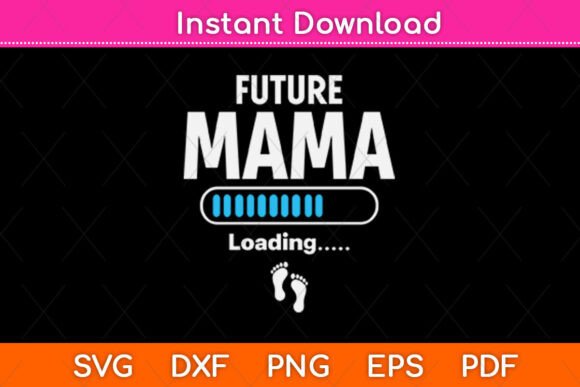
The first impression of the Future Mama Loading Svg Design is one of modern simplicity and playful anticipation. The visual metaphor of a loading bar combined with maternal text strikes a balance between humor and sentimentality that performs exceptionally well in the maternity niche. From an embroidery perspective, the strength of this design lies in its bold geometry and clear negative space. Unlike intricate illustrations that require thousands of fill stitches and complex color changes, this graphic suggests a cleaner digitization path. The linear elements of the loading bar are natural candidates for satin stitch columns or dense running stitches, while the typography can be handled with either fill stitch lettering or, for smaller applications, crisp satin borders.
However, because this originates as a Graphics asset for cutting machines rather than a native embroidery file, caution is required. Vector lines intended for vinyl plotters do not account for thread pull, fabric distortion, or stitch density. Before committing this design to a hoop size, you must evaluate the line weight. If the original SVG lines are too thin, they may disappear during digitization or result in jagged stitching on textured fabrics. Conversely, if the design is overly bold, it could become stiff and heavy on lightweight baby clothes. The mood is perfect for contemporary nursery decor and custom apparel, but the technical execution depends entirely on how faithfully the digitizer respects the original intent while adapting for needle and thread.
Real-World Application: The Maternity Sweatshirt Test
To truly judge the viability of the Future Mama Loading Svg Design, I mentally placed it in a real-life production scenario: creating a premium maternity sweatshirt for an Etsy seller’s holiday collection. This is a high-stakes project where customer trust hinges on professional presentation. A sweatshirt offers a stable, fleece-backed canvas that handles embroidery well, but it also demands careful stabilizer selection to prevent puckering around the design area.
In this scenario, the design serves as a centered chest placement or a left-chest logo-sized motif. For a sweatshirt embroidery project, I would recommend digitizing the loading bar segments as open fill stitches or tatami fills to reduce bulk, keeping the garment comfortable for the wearer. The text should be large enough to remain legible from a conversational distance—typically at least 0.5 inches in height for embroidered lettering. This size ensures clarity without requiring excessive stitch count, which keeps production costs manageable for small shop owners. The contrast of white or cream thread against a sage green or dusty rose sweatshirt creates that coveted boutique aesthetic. Customers react positively to designs that feel soft and integrated with the fabric, rather than like a stiff patch glued on top. By treating the Future Mama Loading Svg Design as a guide for breathable, fabric-friendly digitization, the finished product achieves both visual appeal and wearable comfort.
Navigating Fabric Limitations and Hoop Constraints
While the design concept is versatile, practical application requires awareness of material limitations. Not every surface welcomes this type of graphic equally. When considering baby embroidery or delicate items like onesies, the stitch density becomes critical. Heavy fill stitches on thin cotton jersey can cause tearing or warping. For these applications, I advise converting parts of the Future Mama Loading Svg Design into applique design elements. Using fabric scraps for the loading bar segments drastically reduces stitch count and adds a tactile, handmade quality that elevates the perceived value of the personalized gift.
Crafters must also be mindful of curved surfaces. Caps and hats present significant challenges for horizontal linear designs like loading bars. The curvature of a cap front can distort straight lines, making them appear bowed or uneven. If using this design for headwear, consider repositioning the elements vertically or breaking the design into smaller, independent components that follow the cap’s natural contour. Similarly, highly textured fabrics like terry cloth towels or chunky knits can swallow fine details. On tea towels or blankets, ensure the running stitch outlines are thick enough to emerge above the pile, or use a water-soluble topping to create a smooth stitching surface.
Dark fabrics introduce another variable. Since this is originally a print cut file, it may rely on color contrast that doesn't exist in monochrome thread. Always test the design in black and white mockups before stitching. If the design relies on internal color blocking to define shapes, you may need to add outline stitches or adjust spacing when working with single-color thread on dark garments. This extra step prevents the design from looking muddy or undefined in the final embroidered patch or apparel piece.
Professional Standards for Commercial and Gift Use
For creative entrepreneurs and commercial embroidery businesses, the Future Mama Loading Svg Design represents more than just a cute graphic; it is a potential revenue stream. However, professionalism dictates rigorous testing. Never sell a finished product based solely on a digital preview. Physical sampling is non-negotiable. Test the design on scrap fabric that matches your intended production material. Check thread colors under natural and artificial lighting to ensure readability. Inspect small details after washing to confirm durability, especially for items like bibs or toddler wear that face frequent laundering.
Licensing is equally vital. Because this product is described as a print cut file for Crafts, you must verify whether the creator permits derivative works for commercial embroidery. Some licenses cover vinyl sales but exclude digitized resale or mass-produced apparel. Clarifying this protects your business and respects the original artist. Additionally, when listing items online, use accurate printable mockups alongside photos of actual stitched samples. Buyers appreciate seeing both the idealized design and the realistic texture of embroidery. This transparency builds trust and reduces return rates.
Ultimately, the Future Mama Loading Svg Design holds strong promise for the embroidery community, provided it is approached with technical respect. Its clean lines and relatable theme make it ideal for custom apparel, nursery decor, and thoughtful gifts. By prioritizing proper stabilizer use, appropriate stitch density, and thorough testing, makers can transform this digital graphic into a cherished handmade product. Whether you are an Etsy seller expanding your maternity line or a hobbyist crafting a personalized gift, success lies in bridging the gap between digital precision and textile reality. Treat this SVG as a starting point for your creativity, not a final destination, and your embroidery projects will reflect both artistic vision and professional craftsmanship.