Merry Teacher 1: A Designer’s Embroidery Review
As someone who has spent years digitizing, testing, and reviewing machine embroidery designs for commercial and personal use, I approach every new graphic with a critical eye. When evaluating Merry Teacher 1, my first thought isn't just about how pretty it looks on a screen, but how it will actually perform under the needle. This design falls squarely into the Crafts and Graphics categories, marketed as a versatile asset for sweaters, hoodies, mugs, and pillows. However, as any experienced embroiderer knows, a print-ready PNG is only the starting point for a successful stitched project. My review focuses on translating this digital artwork into a tangible, high-quality finished product that customers or gift recipients will actually cherish.
First Impressions and Visual Personality
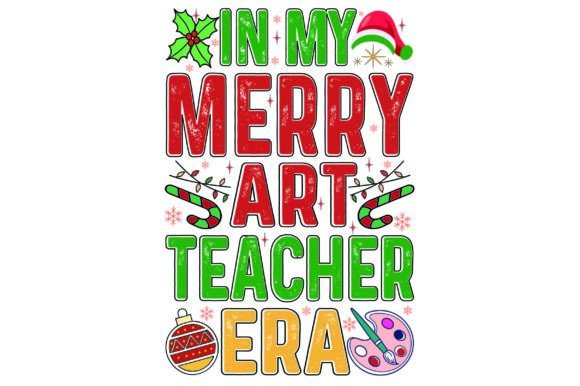
Upon opening the files, the immediate strength of Merry Teacher 1 is its clear, festive hierarchy. The layout suggests a design that understands the importance of negative space, which is crucial when converting graphics to embroidery. Visually, it evokes a warm, nostalgic holiday mood without feeling cluttered. For an Etsy seller or small shop owner, this kind of visual clarity is essential. It reads well in thumbnail photos and printable mockups, which drives buyer engagement before they even see the physical item. The design assets included—a 300 DPI transparent PNG, EPS, and PDF—provide excellent source material. The vector-based EPS file is particularly valuable for those of us who need to resize elements or trace specific shapes for applique designs without losing edge definition.
Real-World Application: The Holiday Sweatshirt Test
To truly judge this design, I mentally placed it in a real-life scenario: creating a custom embroidered sweatshirt for a teacher appreciation holiday gift. Sweatshirt embroidery presents specific challenges due to the fleece backing and stretchy knit face. Merry Teacher 1 appears structured enough to handle this substrate, provided you make smart digitizing choices. If I were stitching this out today, I would likely treat the main graphical elements as fill stitch areas with running stitch outlines to maintain detail without excessive density.
For a tote bag design or apron, the 12x12 inch source resolution offers ample room to scale down for a chest logo or scale up for a full-back print. However, for embroidery, bigger isn't always better. I envision this working beautifully as a 4x4 or 5x7 hoop size centerpiece on a crewneck. The theme naturally lends itself to personalized gifts, perhaps adding a teacher's name below the main motif using a complementary font. This combination of stock art and custom text is what transforms a generic graphic into a premium handmade product with higher perceived value.
Navigating Fabric Textures and Stabilizer Choices
While Merry Teacher 1 is versatile, it requires careful handling on certain fabrics. If you are planning baby embroidery on onesies or lightweight cotton tees, you must be vigilant about stitch density. Heavy fill stitches on thin fabric can cause puckering or tearing. In these cases, I recommend using a cut-away stabilizer and potentially floating the garment rather than hooping it directly to prevent distortion. For textured fabrics like terry cloth tea towels or plush blankets, the design’s details might get lost. Here, you might need to add a knockdown stitch layer beneath the embroidery to create a smooth canvas for the threads.
Dark fabrics present another consideration. Since the provided PNG is transparent, you have the freedom to adjust thread colors to match your garment. However, ensure there is sufficient contrast between the design elements and the fabric. A white satin stitch border can sometimes act as a necessary separator if stitching bright holiday colors onto a navy or black hoodie. Always test your color palette on scrap fabric first; what looks vibrant in a digital embroidery file can sometimes appear muddy once rendered in thread.
Commercial Viability for Makers and Sellers
For creative entrepreneurs and craft business owners, time is money. Merry Teacher 1 serves as a strong foundation for commercial embroidery projects because of its broad appeal. It fits seamlessly into holiday collections, school spirit wear, and boutique branding. When listing finished products on platforms like Etsy, professional presentation matters. Use the high-resolution PNG to create clean, attractive listings, but always include photos of actual stitched samples. Customers trust sellers who show the reality of the stitch-out, including how the design interacts with fabric texture.
If you are selling digital embroidery files derived from this art, transparency regarding licensing is non-negotiable. Before offering any derivative works or finished items, confirm whether your purchase includes commercial rights for resale. As a reviewer, I cannot verify the specific license terms for this product, so please check the vendor’s documentation carefully. Protecting your business means respecting intellectual property while delivering unique value through your craftsmanship.
Technical Considerations for Stitch Success
Even the best graphics require technical adjustments when moving from screen to machine. Here are practical notes for using Merry Teacher 1 effectively:
- Verify Hoop Size Compatibility: While the source is 12x12 inches, most embroidery machines have smaller maximum fields. Determine your target size before digitizing to avoid unnecessary resizing that alters stitch angles.
- Check Small Details: If the design contains tiny text or intricate lines, evaluate whether they can be replicated with satin stitch or if they should be simplified to running stitch. Threads have physical thickness; pixels do not.
- Test on Similar Substrates: Never run a final production piece without a test stitch-out on similar fabric weight and weave. This reveals tension issues, stabilizer adequacy, and color accuracy.
- Mockup vs. Reality: Use the printable mockup for marketing, but manage customer expectations by noting that embroidery has a tactile, dimensional quality that differs from flat printing.
- Washability: Consider the end use. If this is for a kitchen towel or baby item that will be laundered frequently, ensure all edges are properly secured with adequate underlay to prevent fraying over time.
Elevating the Finished Product
Ultimately, Merry Teacher 1 succeeds because it balances festive charm with structural adaptability. It avoids the overly complex shading that often translates poorly to embroidery, instead offering bold shapes that celebrate the medium of thread. Whether you are making a single personalized gift for a favorite educator or producing a line of holiday apparel for your shop, this design provides a reliable aesthetic anchor.
Remember that the value of any embroidery project lies not just in the graphic itself, but in the execution. Proper stabilizer selection, thoughtful thread color matching, and appropriate scaling are what separate amateur attempts from professional results. By treating Merry Teacher 1 as a collaborative partner in your creative process rather than a plug-and-play solution, you ensure that every sweater, pillow, or tote bag you produce reflects the quality and care that defines true handmade excellence. Take the time to understand the design’s strengths and limitations, and it will serve as a dependable asset in your embroidery repertoire for many holiday seasons to come.