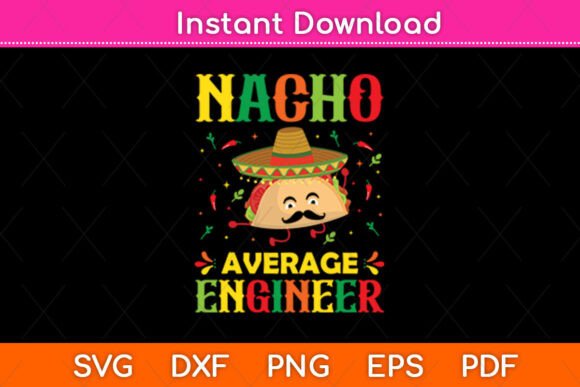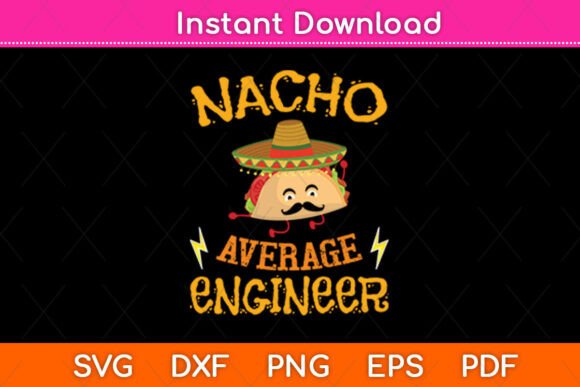
Nacho Average Engineer Cinco De Mayo Svg Review
As a professional embroidery digitizer and product reviewer, I approach every new graphic with a specific question: will this translate from screen to stitch without losing its charm? When evaluating the Nacho Average Engineer Cinco De Mayo Svg, my first impression is that it captures a very specific, playful niche. It balances technical engineering aesthetics with festive holiday energy in a way that feels authentic rather than forced. For those of us in the Crafts industry, finding Graphics that bridge two distinct themes—STEM professions and cultural celebrations—is rare. This design immediately suggests itself as a conversation starter for custom apparel decorators and Etsy sellers looking to serve the engineer demographic during the spring season.
First Impressions and Design Personality
The visual personality of this file leans heavily into humor and relatability. The phrase "Nacho Average" provides a strong typographic anchor, while the engineering elements add necessary visual weight. From a designer’s perspective, the layout appears balanced enough to serve as a central chest placement on a sweatshirt or a prominent left-chest logo on a polo. The mood is lighthearted but structured, which is crucial when targeting engineers who appreciate precision even in their party wear. Unlike generic holiday clip art, this design respects the intelligence of the wearer while still delivering the festive vibe required for a Cinco de Mayo gathering. It feels like a design created for people who actually work in the field, not just a surface-level pun.
Real-World Application: The Custom Tote Bag Test
To truly evaluate this asset, I mentally walked through a recent client project involving canvas tote bags for an engineering firm’s internal fiesta. Canvas is a forgiving fabric, but it requires careful planning regarding stitch density and stabilization. When applying the Nacho Average Engineer Cinco De Mayo Svg to a natural cotton canvas tote, the contrast between the thread colors and the fabric texture becomes paramount. Engineers often prefer clean lines, so I would recommend using a high-quality polyester thread in vibrant greens, reds, and whites to ensure the design pops against the beige background.
In this scenario, the design serves a dual purpose. It acts as a functional item for carrying snacks or gear, and as a personalized gift that acknowledges the team's profession. For small shop owners, this type of project demonstrates how a single digital embroidery file can be leveraged for B2B sales. The key here is ensuring the lettering remains legible at the chosen size. If the SVG contains intricate details typical of engineering schematics, those must be simplified or converted to running stitches to prevent needle breaks or fabric puckering on the tote bag material.
Performance Across Different Substrates
Versatility is the hallmark of a valuable machine embroidery design. While this SVG shines on stable fabrics like canvas or twill, its performance varies elsewhere. On custom apparel such as t-shirts, you must consider the stretch. A dense satin stitch border around the text could cause tunneling on lightweight jersey knits. In these cases, I advise converting borders to fill stitches or using a lighter stabilizer combination. For sweatshirt embroidery, the fleece texture can swallow fine details. You may need to increase the spacing between letters or add an underlay to push the fabric pile down before stitching the top layer.
Caps and hats present another challenge. Curved surfaces distort flat graphics. Before committing this design to headwear, verify that the vertical alignment holds up when wrapped around a cap frame. If the engineering icons are too tall, they may lose registration. Conversely, this design would make an excellent embroidered patch. Patches allow for higher stitch density and finer detail because they are stitched onto stable backing material first, then attached to the garment. This is often the safest route for preserving the integrity of complex graphics.
Critical Considerations for Stitch Clarity
There are specific environments where caution is required. Dark fabrics demand careful thread color selection; white or metallic outlines may be necessary to define the shapes against black or navy backgrounds. Without this contrast, the engineering details might disappear visually. Similarly, textured fabrics like terry cloth tea towels require a water-soluble topping to prevent stitches from sinking into the loops. If you skip this step, the "Nacho Average" text could become unreadable after the first wash.
Small hoop sizes are another limitation. If your machine only accommodates a 4x4 hoop, check the dimensions of the Nacho Average Engineer Cinco De Mayo Svg before purchasing. Resizing a design down significantly can compromise tiny lettering and delicate line work. Always confirm the native size and aspect ratio. Additionally, be wary of layered garments. Embroidering through multiple layers (like a lined jacket) increases friction and drag, potentially shifting the design. Hooping technique and proper stabilizer choice are non-negotiable here.
Impact on Product Value and Customer Trust
For Etsy sellers and handmade shop owners, the quality of your finished product directly correlates to buyer engagement and repeat business. Using a well-evaluated design like this signals professionalism. Customers trust sellers who understand that a digital preview doesn't always equal a perfect stitch-out. By taking the time to test stitch density and adjust for fabric texture, you elevate the perceived value of the item. A crisp, clear execution of this humorous design makes it highly giftable. It transforms a simple graphic into a premium commercial embroidery product that recipients are proud to display.
Furthermore, brand consistency matters. If your shop specializes in STEM-related merchandise, this design fits seamlessly into your existing catalog. It reinforces your niche authority. However, if the stitch-out looks amateurish due to poor digitizing or improper stabilization, it damages that reputation. Visual appeal isn't just about aesthetics; it's about demonstrating competence in your craft.
Practical Designer Notes for Success
Before listing any finished product or selling the digital assets themselves, adhere to these professional protocols:
- Test on Scrap Fabric: Never stitch directly onto a final product without a test run. Use a scrap piece of the exact same material and stabilizer setup you plan to use for the real project.
- Verify Licensing: Since this is an instant download file intended for cutting machines like Cricut Explore, Cricut Maker, and Silhouette Cameo, you must confirm if the license extends to machine embroidery. Cutting files and embroidery files have different structural requirements. Ensure you have the right to sell finished embroidered items or modified digital embroidery files.
- Check Thread Colors: Review the color chart provided (if any) or create your own. Test color combinations in both natural and artificial lighting to ensure the festive palette reads correctly.
- Inspect Small Details: Zoom in on the digital file. Are there gaps in the satin columns? Is the text kerning appropriate for thread? Fix these issues in your embroidery software before stitching.
- Mockup Realistically: Create printable mockups that show the design on actual garments, not just floating in white space. Compare how it looks on light versus dark backgrounds to anticipate customer questions.
- Stabilizer Selection: Match the stabilizer to the fabric weight. Cut-away for knits, tear-away for wovens, and mesh for sheers. This decision dictates the longevity of the embroidery project.
Final Thoughts for Makers
The Nacho Average Engineer Cinco De Mayo Svg offers significant potential for creative entrepreneurs willing to do the groundwork. It bridges the gap between niche professional identity and broad seasonal celebration effectively. Whether you are creating baby embroidery for an engineer’s newborn, designing holiday embroidery for a corporate event, or building inventory for a craft fair, success lies in the translation from vector to stitch. Treat this graphic not just as a cute image, but as a technical blueprint requiring respect for materials and mechanics. When executed with care, it becomes more than just a design; it becomes a best-selling asset in your creative business toolkit.