Stop Staring at My Pickle SVG: An Embroidery Review
As a professional embroidery designer and product reviewer, I approach every new digital asset with a critical eye. When evaluating the Stop Staring at My Pickle Svg Design, my first thought isn't just about the humor or the novelty; it is about how those vector lines will translate into physical thread on fabric. This design falls squarely within the Crafts and Graphics categories, but for those of us running a craft business or managing an Etsy shop, its true value lies in its stitchability and marketability. While this product description highlights its compatibility with cutting machines like Cricut and Silhouette, my focus here is strictly on its performance as a foundation for machine embroidery projects.
First Impressions and Visual Personality
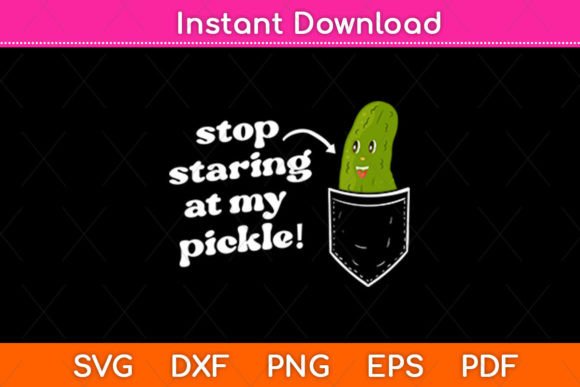
Upon opening the file, the mood is immediately clear. It is playful, slightly cheeky, and undeniably conversational. For a handmade product seller, this specific type of humor targets a very distinct niche audience. The layout typically features bold typography paired with a graphic element, which is excellent for visibility from a distance. However, as an experienced designer, I look past the screen preview. I am analyzing the negative space between letters and the potential complexity of the pickle illustration itself.
The visual personality of this design suggests it belongs on casual, fun items rather than formal wear. It naturally lends itself to custom apparel, tote bags, and kitchen textiles. The phrase implies a social setting, making it ideal for party gear, bachelorette merchandise, or humorous holiday gifts. As a digital embroidery file source, it offers strong potential for personalization, provided the underlying geometry supports clean stitching.
Real-World Application: The Canvas Tote Test
To truly evaluate this asset, I mentally placed it in a real-life scenario: creating a custom embroidered tote bag for a summer market stall. Tote bags are a staple small shop product because they offer a large, flat hooping area that showcases graphics well. In this context, the Stop Staring at My Pickle Svg Design serves as a central focal point.
For this project, I would likely convert the text elements into a satin stitch or a textured fill stitch to ensure readability against the canvas texture. The pickle graphic, depending on its detail level in the SVG, might work best as an applique design. Using a green cotton fabric for the pickle shape with a tight satin border would add dimension that standard fill stitches cannot achieve. This combination elevates the perceived value of the finished product. Customers at craft fairs often touch items before buying; the tactile contrast between the canvas base and the smooth embroidery creates a premium feel that justifies a higher price point.
However, if you are using this for sweatshirt embroidery, the strategy changes. Fleece and french terry fabrics have pile that can swallow thin lines. Here, I would increase the stitch density and perhaps use a topping stabilizer to keep the lettering crisp. The humor of the design relies entirely on legibility; if the text gets lost in the fabric texture, the joke fails, and so does the sale.
Navigating Fabric Limitations and Hoop Sizes
Not every surface is friendly to this specific aesthetic. As a reviewer, I must highlight where caution is necessary. If you plan to use this design on stretchy fabrics like ribbed knits or thin jersey, the risk of distortion is high. The bold nature of the phrase requires stability. Without adequate stabilizer and proper hooping tension, the letters may pull and gap, ruining the professional finish essential for commercial embroidery success.
Small hoop sizes present another challenge. If you are working with a 4x4 hoop, you may need to resize the Stop Staring at My Pickle Svg Design significantly. Reducing complex vector graphics for embroidery can lead to lost details or overlapping stitches that cause thread breaks. Always check the minimum recommended size before committing to a production run. Similarly, curved surfaces like caps require specialized digitizing. A flat SVG does not account for the curvature of a hat brim; attempting to stitch this without modification could result in misalignment or puckering.
Dark fabrics also demand attention. If stitching white or light-colored thread onto black denim or navy canvas, verify your thread color contrast. Sometimes, what looks high-contrast on a backlit monitor appears muddy in natural light. Testing on scrap fabric is non-negotiable here. Additionally, consider the washability. Kitchen towels and baby clothes undergo frequent laundering. Ensure your stitch density is sufficient to withstand abrasion without becoming stiff or board-like.
Commercial Viability and Brand Consistency
For Etsy sellers and creative entrepreneurs, this design is more than just a graphic; it is a revenue opportunity. Its strength lies in its giftability. It fits perfectly into niches like pregnancy announcements, gender reveal parties, or funny anniversary gifts. When listing a finished product derived from this file, your mockups should reflect the intended vibe. A printable mockup showing the design on a wrinkled linen towel feels more authentic than a sterile digital render.
Brand consistency matters. If your shop focuses on minimalist, neutral aesthetics, this bold, humorous design might clash with your existing inventory. Conversely, if your brand celebrates quirky, relatable humor, this asset reinforces that identity. Customer trust is built when products align with expectations. Use this design to attract buyers looking for personality, but ensure the execution matches the quality of your other offerings.
Essential Designer Notes Before Stitching
Before you load this file into your software or send it to production, adhere to these practical guidelines:
- Verify Licensing: The product description states this is for cutting machines. You must confirm whether the license permits commercial embroidery use or digitizing for resale. Never assume rights transfer across mediums.
- Test Stitch Density: SVGs are vectors, not stitch files. If you are auto-digitizing, review the generated pathing. Auto-digitizers often create inefficient jump stitches or excessive underlay that can distort lightweight fabrics.
- Check Thread Colors: Plan your palette before stitching. Variegated threads can make text hard to read; solid colors usually perform better for typographic designs like this.
- Fabric Texture Match: Pair the design weight with the fabric weight. Heavy canvas needs heavier thread or denser stitches; delicate lawn fabric requires lighter touch and finer needles.
- Mockup Validation: Create both light and dark background mockups to visualize contrast issues before wasting materials.
- Stabilizer Selection: Do not rely solely on tear-away for apparel. Cut-away stabilizer provides permanent support for the Stop Staring at My Pickle Svg Design, preventing sagging over time.
Final Thoughts on Production Value
The Stop Staring at My Pickle Svg Design holds significant promise for makers willing to put in the technical groundwork. It is a versatile starting point for personalized gifts, boutique branding, and seasonal merchandise. Success depends not on the file itself, but on your ability to adapt it to the physical realities of needle and thread. By respecting fabric limitations, testing rigorously, and verifying usage rights, you can transform this digital graphic into a profitable, professional-grade embroidered product that resonates with customers and stands up to real-world wear.